The short answer: taste tells you about ingredients, not results
No, a bad taste does not mean a supplement works. Bitterness tells you a powder contains bitter-tasting compounds and nothing to mask them; it says nothing about whether the doses are right, whether the forms are absorbed, or whether you needed those nutrients in the first place.
The idea that “it tastes bad, so it must be real” is popular because a few well-known unflavored powders, Fireblood among them, have turned taste into part of their identity. That framing has a fair point buried in it, and a logical gap. This article separates the two and then gives you a better test.
Where the “tastes bad, so it’s real” idea comes from
Fireblood is the clearest example. Its FAQ describes the taste as “Bad.” Its Andrew Tate page says the powder tastes like victory and calls its approach “function over flavour.” Reviews on its homepage repeat the theme, praising the product while admitting the taste is terrible.
As marketing, it is clever. It takes the most common complaint about an unflavored powder and turns it into a signal of seriousness: if it were a gimmick, the reasoning goes, they would have made it taste like candy. It also flatters the buyer as someone disciplined enough to drink it. None of that is dishonest. Fireblood never hides the taste, and its label lists every dose. But a story that feels right is not the same as evidence. We explain the taste itself in What does Fireblood taste like?.
The fair point: no sweeteners, no flavoring, no filler
Here is what the bitter-taste pitch gets right:
- Nothing is masking the ingredients. An unflavored, unsweetened powder has no sweeteners or flavors in it. If you avoid sucralose, stevia or sugar for your own reasons, that is a genuine advantage.
- The taste is consistent with the label. A powder with about 5 g of free essential amino acids, 500 mg of ascorbic acid and chelated minerals per scoop is going to taste strong. In that sense, the taste is at least not contradicting what the label says.
- Space in a scoop is finite. Fireblood argues that flavorings take up room. How much room a flavor system takes depends on the product, but it is true that a 10 g scoop can only hold 10 g.
Those are reasonable reasons to prefer an unflavored product. They just don’t add up to “it works.”
The logical flaw: bitterness isn’t a measure of potency
The problem is that taste and effectiveness are measuring different things.
- The loudest ingredients aren’t the ones you’d expect. In a powder like Fireblood, most of the taste comes from gram-level amounts of amino acids, vitamin C and minerals. Vitamin D3 (50 mcg), vitamin B12 (2.5 mcg) and selenium (25 mcg) are present in amounts far too small to taste. You could remove them entirely and the drink would taste about the same.
- Bad-tasting products can still be poorly made. An underdosed, degraded or mislabeled powder can taste just as bitter as a good one. Bitterness can’t tell you whether the amount on the label is actually in the tub.
- Good-tasting products can deliver full doses. A vitamin D softgel has no taste at all. A flavored version of the same formula would deliver the same nutrients, as long as the amounts didn’t change.
- Expectation does some of the work. Believing a harsh drink is “doing something” can make people more likely to notice any change, real or not. That doesn’t mean nothing is happening, only that the feeling isn’t proof.
So the honest version of the claim is narrower: the bad taste shows the product isn’t sweetened or flavored. That’s all it shows.
How to judge a supplement powder instead
If taste isn’t the test, these are. They apply to any powder, including ours.
- Every amount disclosed. Look for a full label with no proprietary blends, so you can see each dose. Our guide on how to read a supplement label walks through it.
- Forms that match the claim. Check the form next to each nutrient (for example, methylcobalamin for B12 or bisglycinate for minerals) and whether it matches what the brand says about it.
- Amounts in context. Compare doses with Daily Values and with what you already get from food and other supplements. If you are pregnant, take medication or have a health condition, talk to a healthcare professional first.
- Testing you can see. Look for what the brand actually publishes about manufacturing and testing, such as GMP facilities, batch testing or a certificate of analysis, rather than general claims.
- Price per serving. Divide the plan price by servings. Our cost-per-serving guide shows how.
- Return terms. Know what happens if the product doesn’t suit you.
Applying the test to Fireblood and WARBLOOD
Run both products through the same checklist and the result is more useful than any taste test.
| Check | Fireblood | WARBLOOD |
|---|---|---|
| Every amount disclosed | Yes, 39 ingredients listed | Yes, every amount on the ingredients page |
| Sweeteners or flavoring | None | None |
| Vitamin and mineral forms | Methylated B vitamins, chelated minerals | Same vitamin and mineral doses and forms |
| Published testing | Fireblood says it is made in GMP-certified facilities, batch tested, with a COA available | Not yet published |
| Lowest price per day | $2.07 (3-month plan) | $1.86 (90-day plan, $167.40) |
| If it doesn’t suit you | 30-day money-back guarantee on the single tub | Returns of unopened, unused tubs within 30 days of delivery |
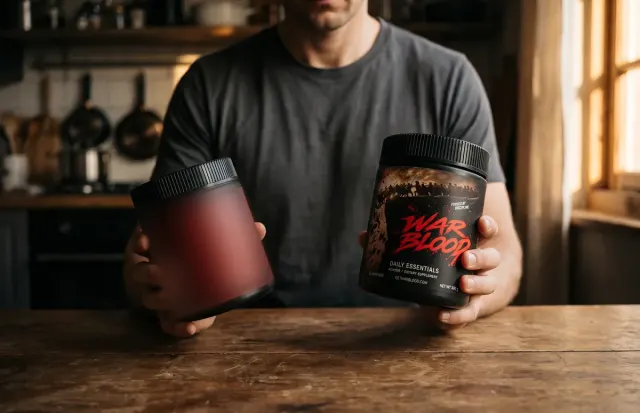
Fireblood is ahead on published testing and on its single-tub guarantee, and that is worth weighing. WARBLOOD’s case is a nearly identical label (differences: B3, leucine, methionine, and 500 mg glycine swapped for sea salt) at 10% less. The full comparison is in WARBLOOD vs Fireblood, and our verdict on the original is in Is Fireblood worth it?.
WARBLOOD and Fireblood: the short version
Both powders taste strong because both are unflavored and unsweetened, not because the taste proves anything about results. Judge them on disclosed amounts, forms, testing, price and return terms instead. If you decide the taste is worth it, these mixing methods help with either one. When you’re ready, see WARBLOOD’s plans.
Sources & transparency
- Fireblood FAQ
- Fireblood: Andrew Tate on Fireblood
- Fireblood homepage
- Fireblood ingredients (full label)
WARBLOOD is not affiliated with, endorsed by, or connected to Fireblood, MWDH Health Ltd, or Andrew Tate. Fireblood is a trademark of its owner and is named here only to compare products. Fireblood details come from getfireblood.com as checked on the date above; prices and formulas can change. See our legal notice.
WARBLOOD owns this publication and sells the product discussed. Comparisons identify their sources and do not imply independent product testing. How our content is prepared.